


I’ve always been drawn to older things.
Not necessarily antiques or objects of value, but places and details that show evidence of having lived a life. A weathered doorway, peeling paint, a faded sign or a building that has slowly settled into its surroundings over decades. These are the things that tend to stop me in my tracks, often when there is nothing particularly remarkable happening around them.
Doorways are a good example. I photograph them far more often than I probably should. Whenever I come across an old doorway, especially one that’s a little beaten up by time, I find myself wondering who has passed through it. More specifically, I wonder who was the last person to walk through it and whether they gave it a second thought. Chances are they didn’t. Most people are busy getting where they’re going. I’m usually standing there wondering about the stories that doorway has quietly witnessed over the years.
That curiosity sits at the heart of much of my photography. New places and perfect things rarely hold my attention for very long. They certainly have their own beauty, but they often feel unfinished from a storytelling perspective. They haven’t yet collected the layers of history that allow the imagination to fill in the gaps. Older places are different. They carry traces of the people who have occupied them, worked in them, passed through them and eventually left them behind.

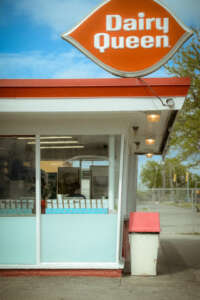
When I photograph something as simple as a faded Dairy Queen sign, I’m rarely thinking about the sign itself. I’m thinking about what it represents. I wonder what it looked like on the day it was installed. I imagine the excitement of a new business opening its doors for the first time. I think about the generations of families who may have stopped there on summer afternoons, and all the small moments that happened beneath that sign long before I arrived with a camera.
The same thing happens when I notice peeling paint on a wall. Most people see neglect. I find myself studying the shapes and textures that emerge as the surface slowly changes over time. I wonder whether it will ever be repaired and what it looked like when the paint was first applied. More than anything, I think about how many people have walked past it without noticing it at all. Photography often begins there for me. Not with a grand subject, but with a simple decision to pay attention to something that others might overlook.
Looking back, I think this fascination has been with me for a long time. As a kid, I was given a subscription to National Geographic. I remember waiting for each issue to arrive and being unusually excited about it. At the time, I didn’t really understand photography. What fascinated me were the stories. The idea that every image represented a place, a person or a moment that existed beyond my own experience. Each photograph felt like a small window into another world.
Years later, I found myself drawn to film photography for similar reasons. The grain, the colour shifts and the imperfections felt more honest than the pursuit of technical perfection. Around the same time, I discovered the work of filmmakers like Wes Anderson. While I enjoy the stories he tells, it was always the visual world that resonated with me most. The colour palettes, symmetry, nostalgia and slightly worn aesthetic all felt strangely familiar. They reflected many of the same qualities I was already searching for through a camera lens.
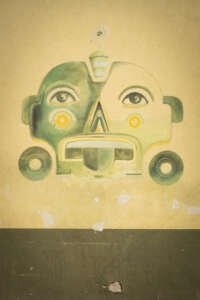
When I look across my own photographs now, a pattern emerges. Boats resting on beaches. Old signs. Murals fading into walls. Hanging light bulbs. Empty streets. None of these subjects are extraordinary on their own. What interests me is the suggestion of a story. The feeling that something happened here before I arrived and will continue long after I’ve left.

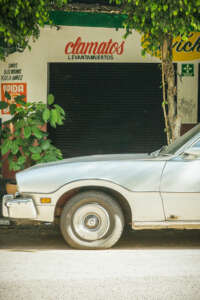
I’ve often been amazed by how differently photographers see the world. Give ten photographers the same street and you’ll likely get ten completely different interpretations of it. Our photographs are shaped by our experiences, interests and the things we choose to notice. In my case, I think I’ve always been drawn to the stories hiding in plain sight. The ones that reveal themselves only after you’ve walked past them several times.
Many of my favourite photographs were discovered exactly that way. They weren’t found in spectacular locations or during carefully planned shoots. They were waiting in familiar places, hiding in ordinary details, patiently waiting for me to finally notice them.
Perhaps that’s why imperfection appeals to me so much. It invites questions. It leaves room for imagination. It asks the viewer to participate in the story rather than simply observe it.
For me, that’s where the most interesting photographs begin.